
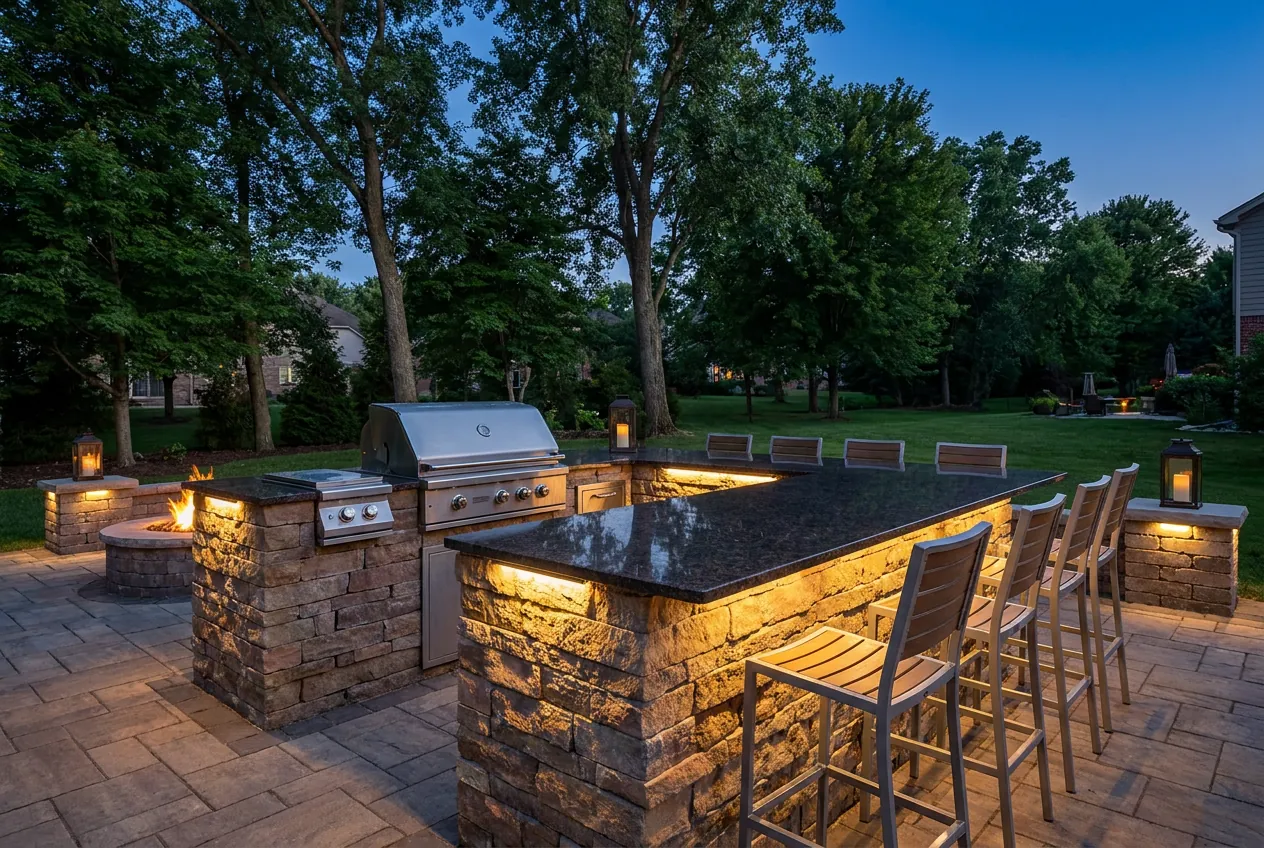
Stone outdoor kitchen island with a built-in grill and granite counter on a paver patio

Outdoor kitchens · Nashville

Outdoor kitchens in Nashville

Grill islands, counters and bars in block, brick and stone, with the gas, the power and the clearances drawn in before the first course.

What is an outdoor kitchen built from?

A core, a counter and the appliances set into it. A masonry island, a concrete block core faced in brick, stone or stucco, has nothing in it that can rot, so the structure lasts like a garden wall. The counter is usually granite or another stone that shrugs off sun and water. The appliances are what wear out, which is why their cutouts are built to the maker’s sizes.

How much clearance does a built-in grill need?

The grill’s installation manual sets it, and the numbers differ by maker. One built-in model’s manual from DCS calls for 18 inches to combustible construction and 3 inches to noncombustible, which is why the cutout is framed in block and a wood pergola overhead gets measured before it’s drawn. Metro’s 2025 fire code amendment adds a distance of its own for grills: 15 feet from combustible material and from buildings with more than two dwelling units, which matters behind a condo or an apartment building.

Gas, power and water

Each is a trench from the house. Gas runs from the meter or a tank to a shutoff at the island, outdoor outlets go on GFCI protection, and a sink needs a supply and somewhere for its drain to go. Every trench is a dig, so Tennessee 811 gets its notice first. Laying the lines before the patio goes down saves cutting the patio later.

Covered or open?

With about 50 inches of rain a year at the airport, a roof over the cook puts the kitchen to use through more of the year. Under a pavilion or a patio cover, the grill maker’s manual says what has to be above it and whether a vent hood is needed. An open island with a fitted grill cover is the lighter option.

What to plan first

Where the cook stands and what they look at, where the smoke goes, how far it is to the back door, and how much counter sits on each side of the grill. The appliances are picked before the island is drawn, because each one brings a cutout size and clearances with it.

Sources

Answers

Outdoor Kitchens: questions people ask

How much does an outdoor kitchen cost?

The appliances and the utilities decide where it lands. A grill island with a counter is the starting point; a side burner, a refrigerator, a sink, bar seating, a roof overhead, and gas, power and water trenched from the house each add to it. Pick the appliances first, then price the island around them.

Do I need a permit for an outdoor kitchen in Nashville?

Ask Metro Codes about the parts that carry trade work. Running gas, adding an outdoor circuit and building a roof over the kitchen are the usual reasons for permits and inspections; the island itself is masonry. Metro’s fire code also wants grills 15 feet from combustible material and multi-unit buildings.

Is an outdoor kitchen worth it?

It is if you already cook outside often. It puts the prep counter, the trash and the fridge beside the grill, so the cook isn’t running into the house for every plate. A roof over it stretches the season in a city that gets about 50 inches of rain a year.

Do I need to cover an outdoor kitchen?

A masonry island can stand in the open; stainless appliances and stone counters are made for weather. A roof makes the kitchen usable in rain and summer sun, and a fitted grill cover is the minimum for an open island. Under a roof, the grill maker’s clearances govern what is overhead.

How long do outdoor kitchens last?

A block-core island faced in stone or brick has nothing in it to rot, so the structure lasts like a garden wall. The appliances wear out first. Building each cutout to the maker’s published size means a grill or a fridge can be swapped later without breaking the counter.

How far does a grill need to be from the house?

Check two numbers: the grill maker’s clearance to combustibles, 18 inches in one DCS built-in manual, and Metro’s fire code, which sets 15 feet from combustible material and from buildings with more than two dwelling units. Wood siding, a wood pergola and a wood fence all count as combustible.

Request an Estimate

Start with the yard

Which appliances you want and how far the island sits from the back door.

Where your message goes and what the site keeps: our privacy policy.

Email Request an Estimate