
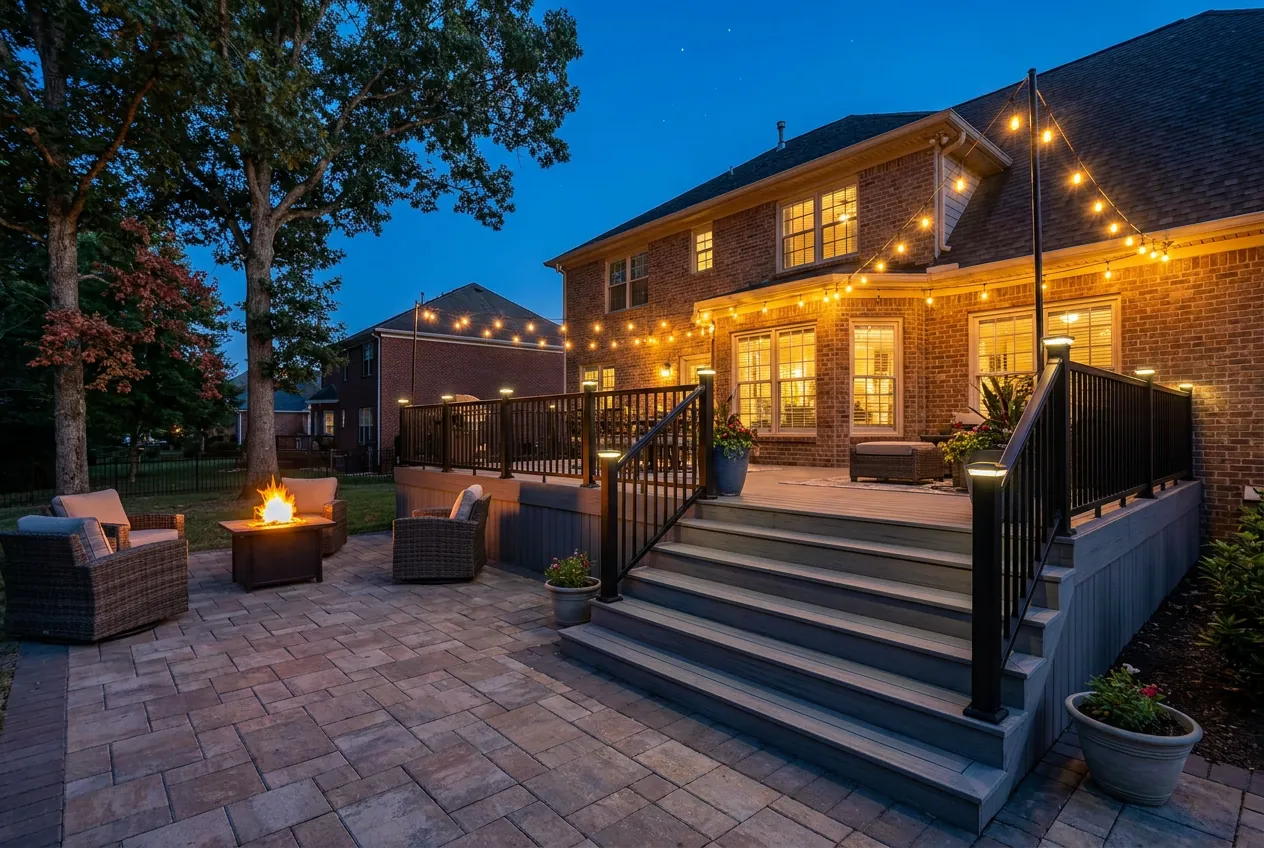
Composite deck with black aluminum railings and wide stairs down to a patio at dusk

Decks · Nashville, TN

Deck builders in Nashville, TN

Wood and composite decks, with stairs and rails, built to Metro’s residential code and tied into the patio below.

Do you need a permit to build a deck in Nashville?

Yes. Metro Codes’ page on adding a deck says new deck construction requires a building permit, and it gives no exemption for low decks. Metro’s ordinance BL2025-898 adopted the 2024 International Residential Code with local amendments, and that’s the code a new deck is inspected against.

How deep do deck footings go?

Metro’s amended Table R301.2 puts the frost line at 12 inches and rates weathering in Davidson County as severe. The American Wood Council’s deck guide, DCA 6, sets the bottom of a footing 12 inches below grade or below the frost line, whichever is deeper. In Nashville the two numbers agree.

When does a deck need a railing?

Once the walking surface is more than 30 inches above the ground below it, DCA 6 calls for a guard, and the openings in that guard must stop a 4-inch sphere, small enough that a toddler’s head can’t slip through.

Wood or composite?

Pressure-treated pine is the usual frame under either surface. On top, treated pine or cedar boards cost less and need cleaning and sealing to stay sound. Composite and PVC boards skip the sealing, cost more up front and run hotter in full sun. Either one lasts when the frame under it is built right and the ledger is flashed where it meets the house.

Decks and patios together

On a lot that falls away from the back door, a deck carries the kitchen floor level out over the yard and a patio picks up at the foot of the stairs. Building both at once lets the stairs land on the pavers instead of a pad of their own, and lets the lights, the rails and the walls match.

Sources

Answers

Decks: questions people ask

How long does a deck last?

The frame decides it. A pressure-treated frame on proper footings, with the ledger flashed against the house, outlasts the boards on top; composite boards don’t rot, and wood boards last longer kept sealed. Water trapped where the deck meets the house is the usual cause of early failure.

Is composite decking better than wood?

It depends on what you want to maintain. Composite costs more up front, needs no sealing and can run hot in full sun. Treated pine and cedar cost less and need regular cleaning and sealing. The frame under either is usually pressure-treated lumber, built to the same code.

Do I need a permit for a deck in Nashville?

Yes. Metro Codes requires a building permit for new deck construction, and its deck page gives no exemption for low decks. The work is inspected against Metro’s version of the 2024 International Residential Code, so the permit comes before the first footing is dug.

How high can a deck be without a railing?

Up to 30 inches above the ground below. Past that, the American Wood Council’s DCA 6 guide calls for a guard, with openings small enough that a 4-inch sphere can’t pass through. Stairs and landings are measured the same way.

How deep do deck footings need to be in Tennessee?

In Davidson County, at least 12 inches below grade, which matches Metro’s frost line. DCA 6 sets footings 12 inches down or below the frost line, whichever is deeper; other Tennessee counties set their own frost depth, so check locally outside Nashville.

How much does a deck cost?

Size, height, material and stairs set the price. A low, square deck in treated pine is the simplest build; composite boards, metal railings, multiple levels and long stair runs add to it, and a tall deck on a slope needs longer posts and more bracing. The estimate starts with the size and height.

Request an Estimate

Start with the yard

How high off the ground, roughly how big, and wood or composite.

Where your message goes and what the site keeps: our privacy policy.

Email Request an Estimate