
How tall can a fence be in Nashville?
That depends on where it stands on the lot. Under Metro’s zoning code (17.12.040), within 10 feet of the street a solid fence stops at 30 inches and an open one, such as picket, rail or iron, at 72 inches. Anywhere else in the front setback the limit is 6 feet, and along the side and rear yards it’s 8 feet.
Do you need a permit for a fence?
Usually not. Metro Codes’ fence page says no building permit is needed, with one exception: a lot inside a historic overlay needs a Preservation Permit before the fence goes up.
Call 811 before the post holes
A fence line can mean dozens of post holes, and each one is a dig under Tennessee law. Notice goes to Tennessee 811 at least three working days ahead, and once the lines are marked the ticket holds for 15 calendar days.
What keeps a fence straight?
The posts. Wood posts set in concrete below Davidson County’s 12-inch frost line, or steel posts, stay plumb; a post set shallow in wet clay leans after a winter. A gate post carries the whole weight of the gate on one side, so it needs a heavier post and footing than the line posts around it.
Wood, metal or both?
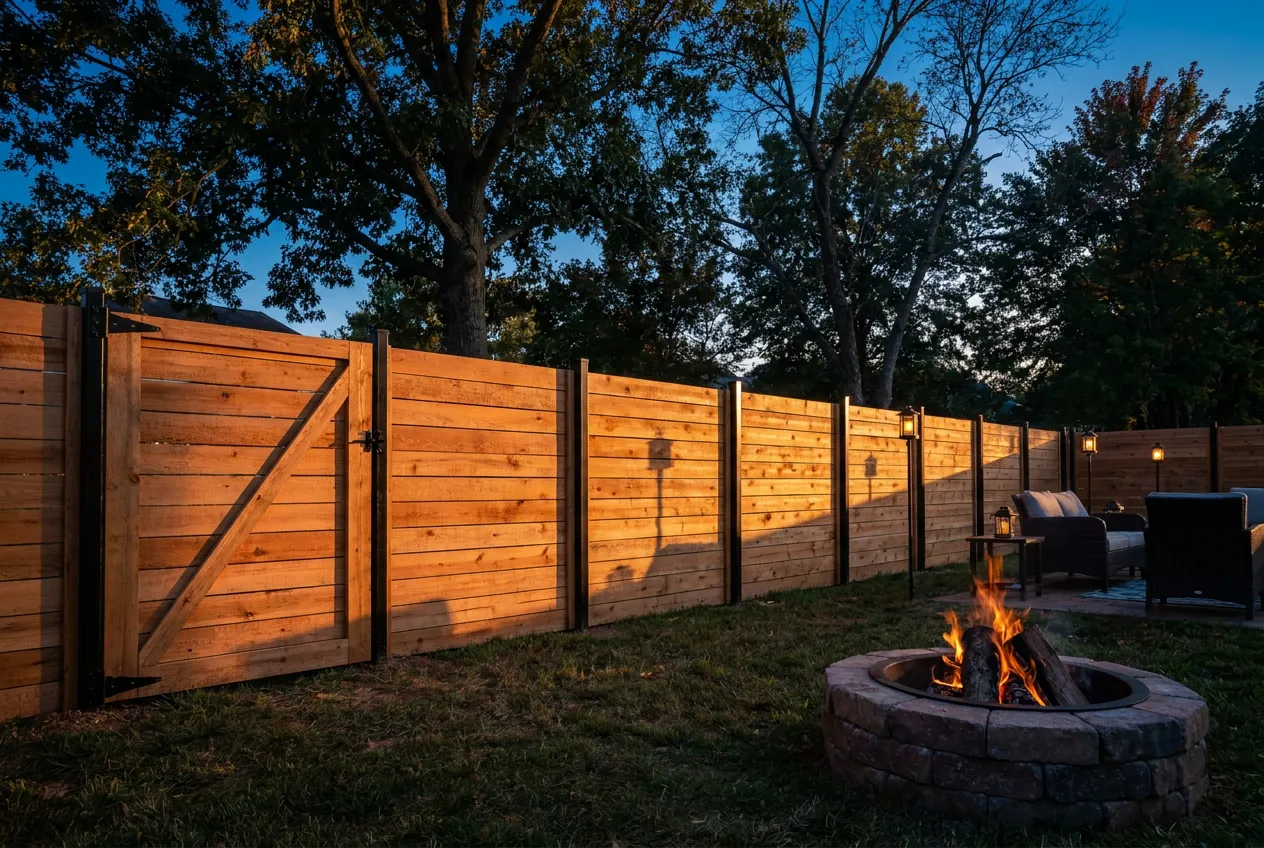
Cedar boards laid horizontal or on a shadowbox pattern give privacy with a cleaner look than stockade pickets. Pressure-treated pine costs less and is what most posts and rails are made of. Aluminum and steel cost more up front and need no stain, and an open metal fence can stand 72 inches tall near the street where a solid one can’t pass 30. Black steel posts with cedar boards between them combine the two.
Sources
- Metro Codes, fence permits — height limits under 17.12.040 and the Preservation Permit
- Tennessee 811, frequently asked questions — TCA 65-31-101 notice and ticket life
- Metro Nashville ordinance BL2025-898 — frost depth